


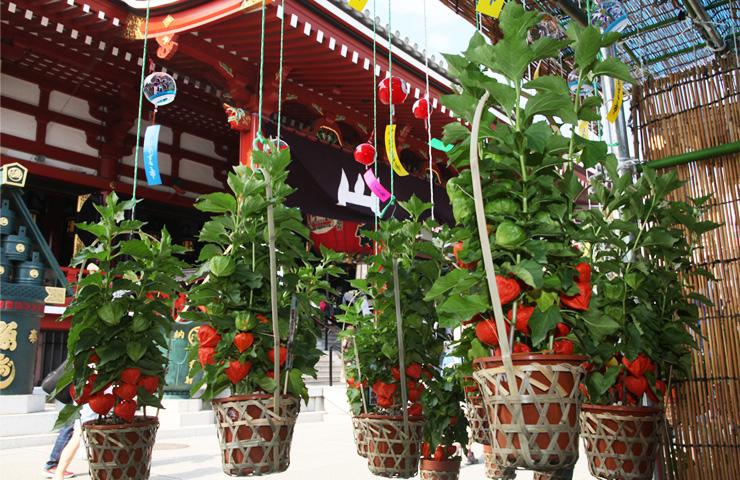
The Hozuki Market at Senso-ji Temple — Experience the Beauty of Japanese Summer in Asakusa
Every year on July 9 and 10, one of Tokyo’s most famous summer traditions takes place at 浅草寺 — the Hozuki Market.
During this special event, the temple grounds are filled with colorful potted hozuki (Japanese lantern plants), whose bright orange-red lantern-shaped fruits create a beautiful summer atmosphere unique to Japan.
The Hozuki Market is held together with a special temple festival day called “Shimanrokusennichi” (46,000 Days)” at Senso-ji Temple.
For centuries, people in Japan have believed that:
“Praying at Senso-ji Temple on July 10 brings the same spiritual blessing as praying there for 46,000 days.”
46,000 days is equal to approximately 126 years, making this one of the luckiest and most meaningful days to visit the temple.
Because of this belief, many visitors come to Asakusa during these two days to pray for health, happiness, and good fortune.
The Meaning of Hozuki in Japanese Culture
The hozuki plant has long been loved in Japan as a symbol of:
- Protection from evil
- Good health
- Welcoming ancestral spirits
It is often displayed during the Obon season, when Japanese families honor their ancestors.
Because the translucent red fruits resemble glowing lanterns, people once believed they could guide ancestral spirits home.
Today, hozuki remains one of the most iconic symbols of the Japanese summer season.
A Traditional Japanese Summer Festival
During the Hozuki Market, Asakusa becomes lively both day and night.
Visitors can enjoy:
- Stalls selling hozuki plants
- The sound of traditional wind chimes
- People wearing yukata summer kimono
- Japanese street food
The atmosphere becomes especially magical in the evening, when the illuminated temple buildings and glowing orange hozuki create a dreamlike summer scene.
This traditional event has continued since the Edo period and offers a rare chance to experience the nostalgic beauty of old-fashioned Japanese summer culture while still in modern Tokyo.
After Visiting Senso-ji Temple, Enjoy Tea Ceremony at Wasako
和茶子-wasako- offers authentic Japanese tea ceremony experiences that celebrate the beauty of the seasons.
Located near Senso-ji Temple, inside the traditional Japanese rooms of Saryo Ichimatsu, guests can enjoy a peaceful moment away from the busy streets of Asakusa.
After walking through the lively festival atmosphere, step through the gate and enter a calm and quiet Japanese space.
While learning about tea ceremony traditions, you can:
- Choose your favorite Japanese sweets and tea utensils
- Enjoy delicious matcha
- Experience preparing matcha yourself
Our instructors carefully guide guests step by step, so even first-time visitors can relax and enjoy the experience comfortably.
毎年7月9日・10日は夏の東京の風物詩として有名な浅草寺のほおずき市があります。
境内にはたくさんの「ほおずき(鬼灯)」の鉢植えが並び、鮮やかなオレンジ色のほおずきが夏らしい景色を作り出します。
このほおずき市が開催される7月9日・10日は、浅草寺の「四万六千日(しまんろくせんにち)」という縁日です。
昔から、
「7月10日に浅草寺へ参拝すると、46,000日分お参りしたのと同じ功徳がある」
と言われてきました。
46,000日というのは、約126年分にもなるため、とても縁起の良い日として多くの人が参拝に訪れます。
ほおずきは昔から、
- 魔除け
- 無病息災
- ご先祖様を迎える灯り
などの意味を持つ植物として親しまれてきました。
お盆の時期に飾られることも多く、日本の夏を象徴する植物のひとつです。
その赤く透ける実が提灯のように見えることから、ご先祖様の道しるべとも考えられていました。
ほおずき市の時期の浅草は、昼も夜もとても賑やかです。
境内には、
- ほおずきの露店
- 風鈴
- 浴衣姿の人々
- 屋台グルメ
など、日本の夏らしい風景が広がります。
特に夕方から夜にかけては、浅草寺のライトアップとほおずきの鮮やかな色がとても美しく、幻想的な雰囲気になります。
江戸時代から続く伝統行事でもあり、東京にいながら昔ながらの日本の夏を感じられる貴重なお祭りです。
浅草寺のお参りの後は、和茶子-wasako-へ
和茶子-wasako- では、季節感を大切にした茶道体験をご提供しています。
浅草寺からほど近い、茶寮一松の本格的な和室で、静かな時間を過ごしてみませんか?
賑やかな浅草の街を歩いたあと、一歩、門の中へ入ると、そこには穏やかな空気が流れています。
茶道について説明を聞きながら、お好きな和菓子やお茶道具を選び、美味しい抹茶を楽しみ、ご自身でも抹茶を点てていただきます。
初めての方でも安心してご参加いただけるよう、インストラクターが丁寧にご案内いたします。
日本の夏を、五感で感じてみませんか?
ほおずき市の賑わい。
風鈴の音。
伝統的な和風建築の浅草寺。
そして、静かな茶室で味わう一碗の抹茶。
日本の夏には、派手ではないけれど、心を穏やかにしてくれる美しさがあります。
浅草寺へお参りされた際には、ぜひ和茶子-wasako-で、日本文化ならではの“涼”と季節感を体験してみてください。
皆さまのお越しを、心よりお待ちしております。
When it comes to tea ceremony experiences and matcha in Tokyo, Wasako is the place to go.
東京で茶道体験・抹茶といえば和茶子-wasako-の茶室